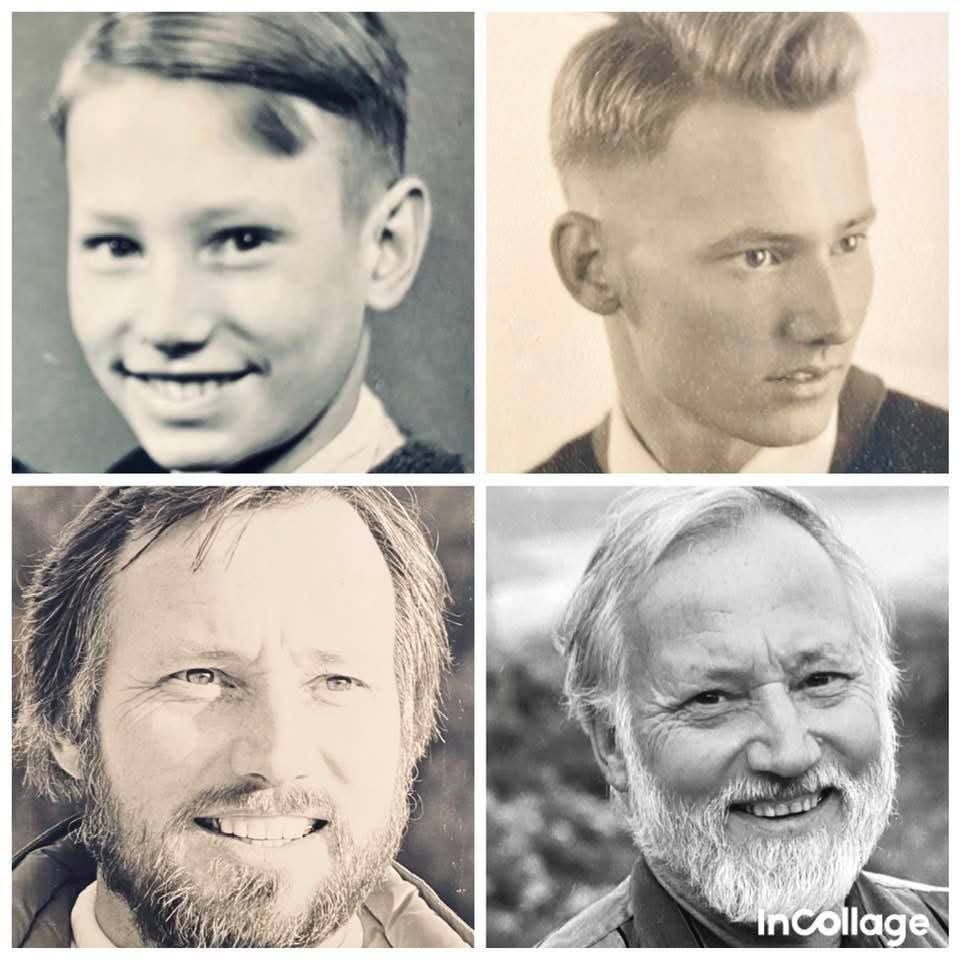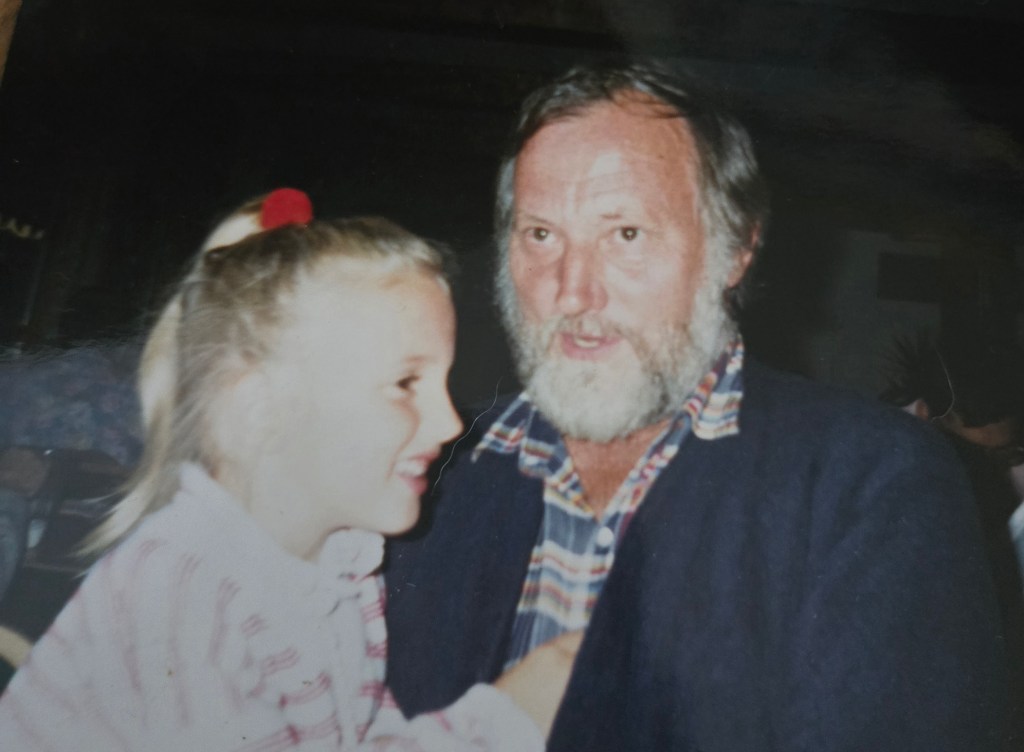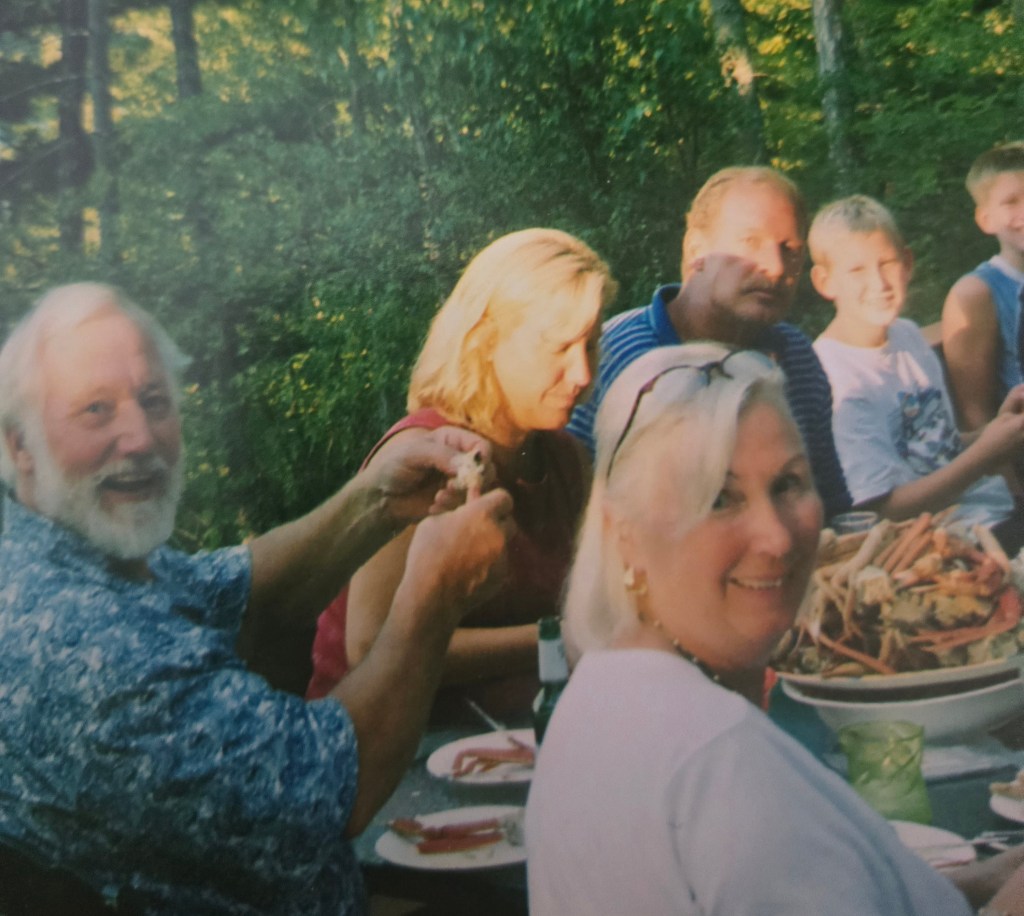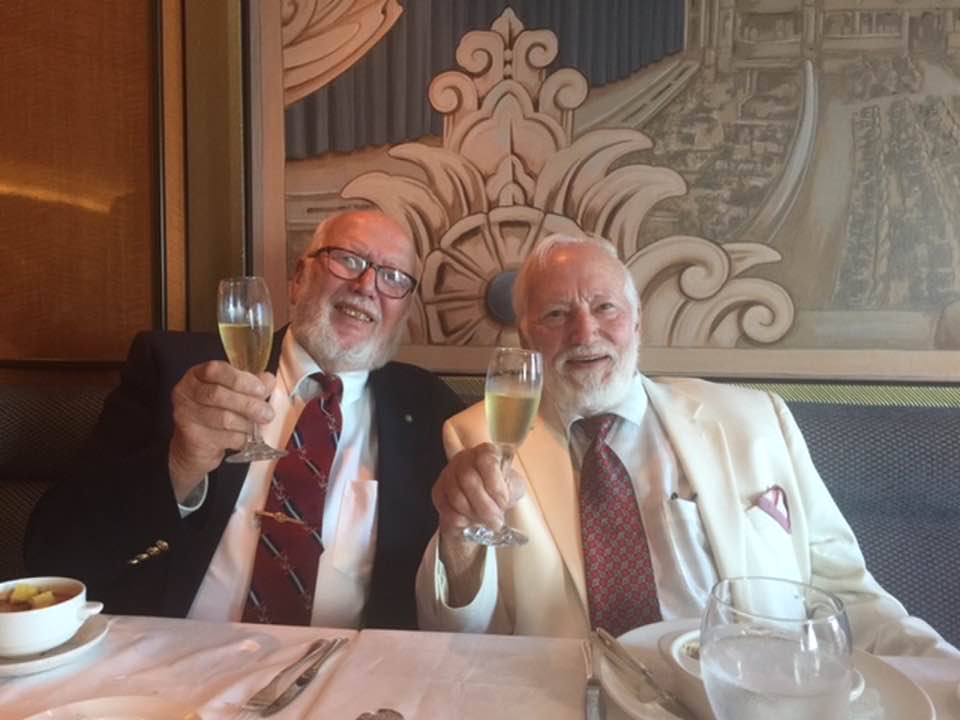
Tales My Father Told Me

A Collaborative writing project to tell the life story of Jochen, a German Immigrant and American Citizen born in the Free City-State of Danzig in 1937.

  • Gardens and Donuts

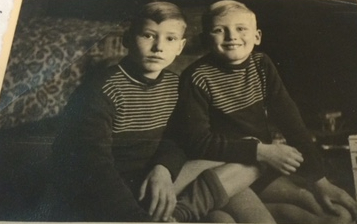
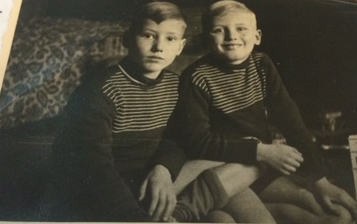
    “Back again on the cattle-cars we went. This time more prepared for what to expect. At least we knew that this time there wouldn’t be any machine-gun fire to dodge. Just hunger. We were always trying to dodge hunger. My brother and I would quickly leap from the train to steal radishes and carrots from gardens we would pass, against Mutti’s wishes. I didn’t understand the difference at the time between stealing from a farm-field and stealing from a personal garden, but Mutti did and scolded us for this. Sometimes we’d hop out and play on the tracks. waiting for military trains to pass. We’d stop frequently as we had to wait for passing trains, and on one of those stops Mutti remembered that her brother’s in-laws lived in the town we had stopped at. She was permitted to leave the train for a few hours as we waited. We had to stay with the officials in charge of the refugees.

    Soon, Mutti returned with a huge smile on her face. “Get the luggage! Get your backpacks! We’re staying in Minden!” She beamed with happiness, as she hugged and kissed us. She had found us a place to stay! Mutti had not known where her brother’s in-laws lived, but she knew their last name, so she had asked the conductor if he had known anyone by the name of Busche who had retired from the railway. As luck would have it, he knew the street Mr. Busche had lived on. So Mutti, went door to door knocking at each house, hoping that her relatives would open the door.

    The streets at this time were filled with homeless people and refugees. Many people from Eastern countries like Poland, Hungary, and Czechoslovakia. Many who didn’t speak German. Many people were dirty and ragged, and after days on the train, we looked nearly as rough. Miraculously she found their home, and after explaining our situation, they offered us a place to stay.

    Days before our arrival, Minden had passed the “Refugee Resettlement Act”, that required that all households open their homes to refugees if they had more than one room per person. The Busche’s owned a home with a five rooms, and they were being forced to give up three of their rooms to strangers. Scared of who might be made to move in, Mutti showing up on their door was a perfect solution.

    We would be the refugees that they had move into their home! We were no longer homeless!

    Opa and Omi Busche were incredibly welcoming. We had never met them, but they made us feel at home and shared whatever we needed with us. In no time, Mutti had found a job as a Masseuse at the local hospital. While she worked, Opa watched over us and taught us many things. Opa was a retired railroad man, but now his main hobby was gardening. This was a wonderful hobby to have at the time, since food was so scarce and hard to find. He had a cellar packed full of root vegetables that he had grown and stored, which kept us from starving, when others had nothing. He also fed the others in the nearby apartments as much as he could during this time of famine and starvation. When we were home, Opa kept us busy in the garden. He taught us how to build raised beds and weed and plant and harvest. We were even allowed our own small garden where I planted radishes, carrots, and beets, while Gottfried planted flowers and potatoes. These useful skills I still remember to this day. This was our education while we still were not back in school due to the war disruptions.

    Since there was no school, children were to help with the procurement of food. I got my first job at a little bakery, where we would bake the strange corn flour the Americans provided, and attempt to make German breads, which turned out nearly inedible and hard. Some days we worked in the farm fields all day, just for the privilege of harvesting a single carrot or a few potatoes at the end of the day as our payments. Mutti traded her massages for food instead of money.

    There was a nearby railway station, where a military field kitchen had been set up for the passing troop trains to come and eat. Gottfried and I would often go to the railroad to beg for food from the passing soldiers. Whenever a train would pass, we would jump and shout and beg.
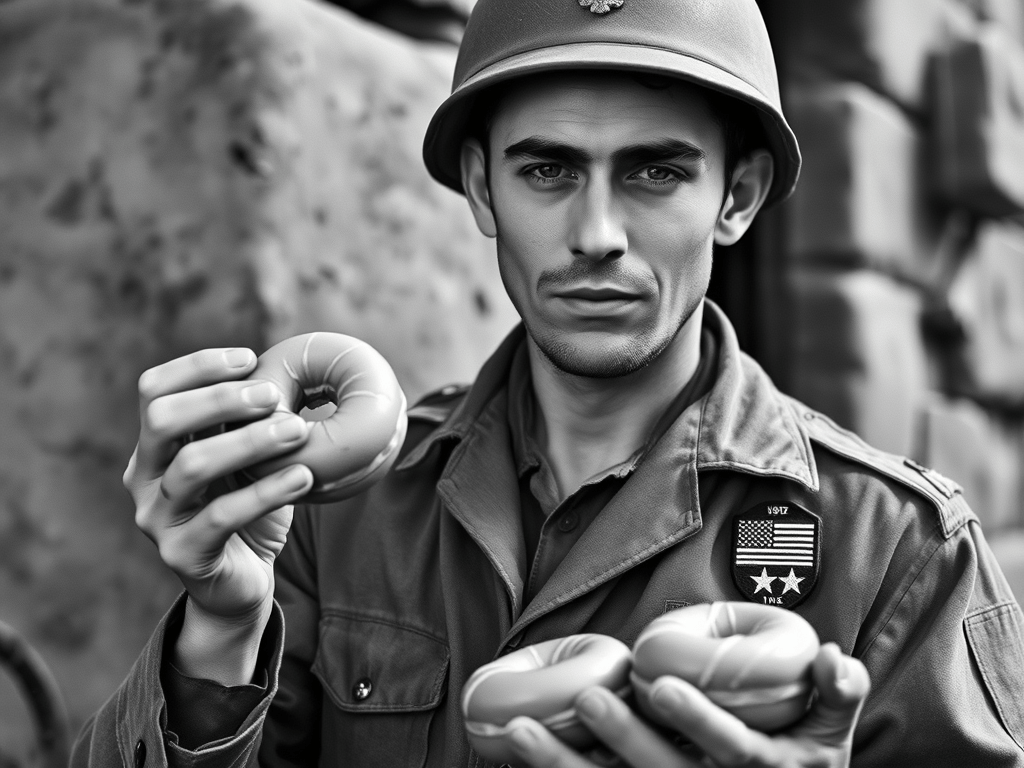
    “DONUTS!!” This was the first word that I mastered in the English Language. We were always hoping for American troop trains, because soldiers would throw us donuts or once in a while a candy bar.

    After the war, hunger was rampant. It seemed everyone was starving, and on the outskirts of Minden stood a number of gigantic silos and the storage magazine. What used to be a major food supply center, was now graded by British soldiers. There was still a lot of food inside, and one day there was a revolt of the starving population of Minden. A mass of people stormed the depot.

    Despite warning shots, everyone ran to grab whatever they could. Since Gottfried and I were nearby, we joined the crowd. In the warehouse, we found a 5 gallon tin-can of molasses. We each took one handle, and struggled to get it home as it swung back and forth between the two of us rushing to get it back in the house. Opa hid this in the cellar, just in-case someone came looking for the stolen goods.

    You had to do what you could to survive those days. And we were proud we had helped feed our family.” – Jochen
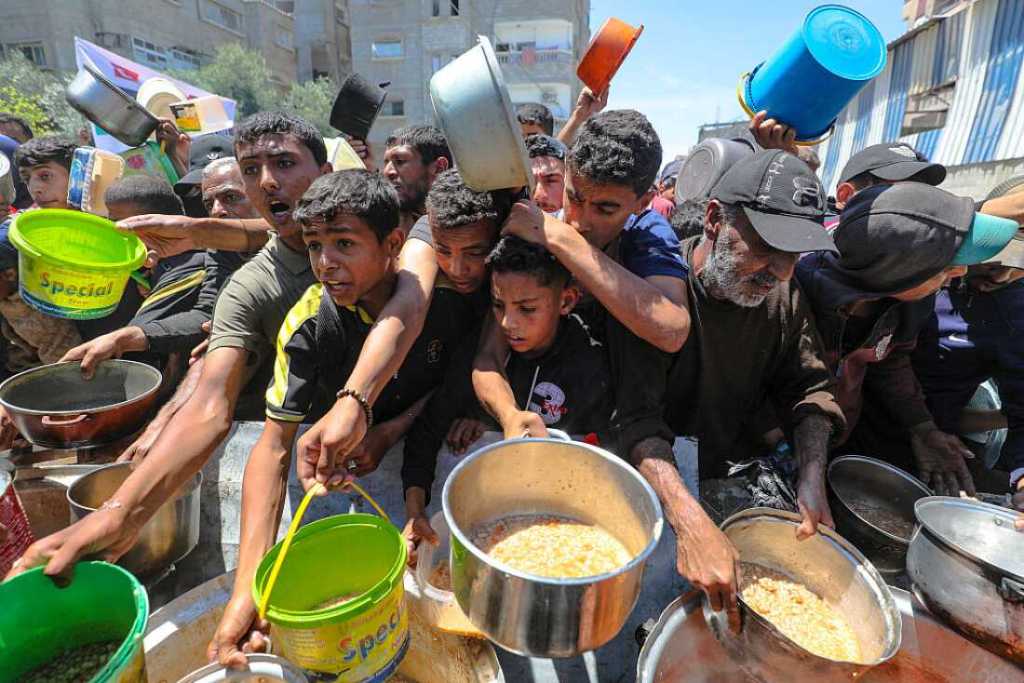
    Hungry dislocated Palestinians rush to food distribution kitchen and extend their empty containers to receive food in Gaza, Palestinian territories, on May 7, 2025. United Nations has issued a “stark warning” after two months of Israel’s nearly total blockade of Gaza, where food is scarce and “people are fighting over water amid relentless bombing”. (Photo by Moiz Salhi / Middle East Images / Middle East Images via AFP) (Photo by MOIZ SALHI/Middle East Images/AFP via Getty Images)

    It’s hard not to make comparisons while writing my father’s story, to what is happening in the world today. The dirty part of war that is rarely discussed. What happens after, when populations are left with nothing and no way to get more. Homeless, lost, hungry, dying. Trying to survive in the rubble of what is left. My father and his family were so fortunate to find a loving home to lay their heads with a person who taught them skills to grow their own food, when no one had the money to buy food even if it was available.

    Unfortunately, you can turn on the news and see every day, starving people in Gaza desperately begging for food which is being distributed by the Israeli military. I can’t help but make comparisons between the revolt in Minden, where people stormed the depot for food, and the scenes I’ve seen in Gaza where desperate people are rushing the distributions sites for food.

    Unfortunately, there are more than just warning shots in Gaza. Every day people are being killed. Kids too. Starving kids being killed trying to get a bag of rice or whatever it may be. My heart breaks. Children starving to death, being gunned down. What is happening in the world today? I see the footage of people running with giant boxes or bags, and think of my Dad and Uncle Gottfried awkwardly running home with their stolen molasses.
    Have we not learned lessons? Do only kids on one side of a war matter if they starve to death? My father was a German child, the losers of the war, so is what happened to him similar to what is happening in Gaza in regards to the famine and starvation? Thankfully, my father and Uncle made it home safe. Not everyone today is so lucky.

    Just things I think about that are hard to ignore.

    Maybe it’s in my blood now, but I’ve been gardening too recently. Working on growing food from seed. It’s such an important skill that I think is often lost by many. Maybe more people should learn. Have a “just in case” garden, where you can grow and enjoy and be slightly less dependent on grocery stores. So much is going on in the world today, and it can be a lot to handle mentally. Might I suggest getting your hands dirty? Reconnect with nature. Remember the ways of our ancestors.

    Live! Love! Learn! Grow!

    -Verina

  • Reichsdeutsche

    After WWI, the Treaty of Versailles made Danzig, my father’s hometown, a free city/state. He was ethnically German, however, at the time of his birth, 1937, Danzig was not Germany or Poland, instead it was it’s own free governing city. Hitler was angry that this free city of Danzig, which he still considered to be a German city was now separated by the Polish Corridor and cut off from the rest of the Reich. He demanded Danzig be returned to Germany, and access be granted between Germany and Danzig, and when the Polish refused, the invasion of Poland began. On September 1, 1939, the first shots of WW2 rang out as my father slept in his crib. So, by the age of 2, he now lived in Germany, as Danzig was annexed along with Poland. Citizenship by German descent.

    This would be short-lived however, when in January 1945, he and his family would be forced to flee their city due to the advancing Soviet army. By March 1945, the Soviets would have taken full control of Danzig, which had been reduced to rubble, so there was no hope of return. They would eventually make their way to Austria as refugees, which had also been annexed by Germany. This is where they were living at the end of WW2.

    As ethnic Germans (Reichsdeutshe), who had moved to Austria AFTER it had been annexed by Germany, they would soon find themselves forced to move again. After the war ended, the Allied powers in Austria were trying to disentangle Austria from Germany. Anyone who was clearly Reichsdeutsche, regardless of their precise pre-war origins in places like Danzig, was considered a foreign national in the context of Austria’s re-establishment as an independent state. The Allies wanted to send these German citizens back to Allied-occupied Germany.

    And with this, begins the story of the second time my father was forced to leave his home, with no place to go, before his 8th birthday in 1945.

    “We were starting to truly love living in Austria. With the war now officially over, we were able to relax a bit more and start settling into life in the Alps. Mutti loved hiking and taking long walks through the mountains with her new blossoming love Walter, and although still a prisoner-of-war, they began planning their life together once he would be released. His home had been in Riga, Latvia, which was now Soviet territory, so he could not return there. Our home had been in Danzig, Germany, which was now Poland, so we could not return there either. So, starting a new life together in Austria, where the air was fresh and the Alps were stunning, seemed like a wonderful plan.

    One month after our vacation trip with Walter, we came home to find Mutti sobbing at the kitchen table. “What am I going to do?  Where will we go?  We have no money.  We will have no food.  How can they do this to a woman with two small children?” Mutti had just been notified that we were being forced to leave Austria immediately. We had one week to leave the country voluntarily or would be deported forcefully. Trains were being provided. We were being deported for being ethnic Germans.

    Just when the world had started returning to some semblance of normal. Just when Mutti had found a new partner and had hoped that life for her children would start to improve, everything was once again turned upside-down. We had no food, no money, no home, and Mutti had no idea where to find anyone who could help us. Despite everything we had been through, she would later say that this was the worst day of her life. The day she found out we had to leave once again, with nowhere to go.

    Walter came to console her, and they spoke long into the night. He said she should try to resettle somewhere in the western part of Germany, because he felt that the Russians would try to keep the Eastern counties as part of their territory. He offered us some military rations for our journey, and promised that he would find her again once he was released. She hugged him goodbye, and then a few days later, on July 10, 1945, we were once again loaded onto the same cattle-cars that had taken us here towards the end of a war we had been trying to escape months ago.

    At least, this time we were “old pros”. We knew to choose straw bunks near the sliding doors for better ventilation. We knew to bring as much food as possible since we had no idea how long the journey would take and had no way to get food wherever we ended up. And despite Mutti’s opposition, we knew how to hop out and quickly steal food from the fields of crops that we passed. Mutti had hidden and saved some of our food we had been gifted in Tulfes, which she had packed along with the C Rations from Walter.

    So our journey began again, back on the cattle-cars that had once transported the prisoners and Jews to the Camps, now taking us on our second refugee-train to places unknown.” – Jochen

    Looking for more informations about the circumstances of their sudden order to depart Austria, my dad being the child a Waffen-SS Officer, may have added to his family being  targeted by for immediate need to return to Germany sooner than others.  As they say, “guilt by association.”  Despite a nearly unheard of at the time divorce in 1942 and despite his Vati never having been with them in Austria, any record of them being family of an officer would have been a huge red flag against them. They most certainly would have been quickly targeted in the “De-Nazification” measures of Austria by the Allied Forces in support of the Austrian government. They never would have been allowed to stay. These measures sought to send anyone with possible Nazi connections or affiliations, out of once annexed nations, and back to Allied-occupied Germany, with little proof necessary. This, along with them being classified as “Reichsdeutsche,” was the nail in the coffin of their dreams of starting their lives fresh in Austria.  Even if their hometown had still been standing, no ethnic Germans were allowed to return to Danzig/Gdansk because it was now part of Poland. The place they were from no longer existed.

    The strange circumstances of my father being an ethnic German, but not born in Germany, along with them being forced to also leave Austria, is the exact reason why he and his brother would have qualified as Displaced Persons who could immigrate to the United States of America. They wouldn’t have been able to qualify at first, as Germans were first excluded in the US Displaced Persons Act of 1948, however in 1950, when it was amended to include Germans, their no “repatriation” status would have been the qualifying key to their eventual immigration years later.

    But, I guess things happen for a reason. Had they been born in Germany, they may not have been able to qualify to immigrate to the United States. Had Austria allowed them to stay, they also may not have had the necessity to immigrate to the U.S. So, therefore, without these terrible circumstances, my Dad probably never moves to America. He never meets my mom. I never exist.

    Life is all about finding the silver lining. Seeing the blessings that come from the places that rock our world the most. The things that turn our lives upside down often have to take place in order for some of the greatest things in our lives to ever have the possibility of happening. My father went through hell, but at least something good came out of it when roughly 10 years later, that hell gave him the opportunity to become an American.

    So, when you talk poorly about refugees around me, when you say they are a burden to our country and it’s a good thing that the Trump Administration has ended Refugee Resettlement, you are saying to me, “Verina, I wish you didn’t exist.”  Because if my father had not been allowed to immigrate to our country due to his refugee “displaced person” status, that is the reality of what would have happened.  My mother is from Rhode Island, she has absolutely no connections to Germany, she never would have gone there.  I cease to exist.

    He wanted a piece of the American Dream after surviving a brutal war and Post-Ww2 Germany,  and when given that opportunity, look what he did with it. He worked hard, built hundreds of homes and boats, served in the Marines (before obtaining citizenship), owned businesses, and created a beautiful family. He paid his taxes and didn’t break the law. He took part in our democracy, served his community, and exercised his rights as a U.S. Citizen.

    He’s no more deserving of asylum than any other person seeking a better life for themselves and their families, especially those fleeing war or violence or who have been displaced by no fault of their own, like he was.

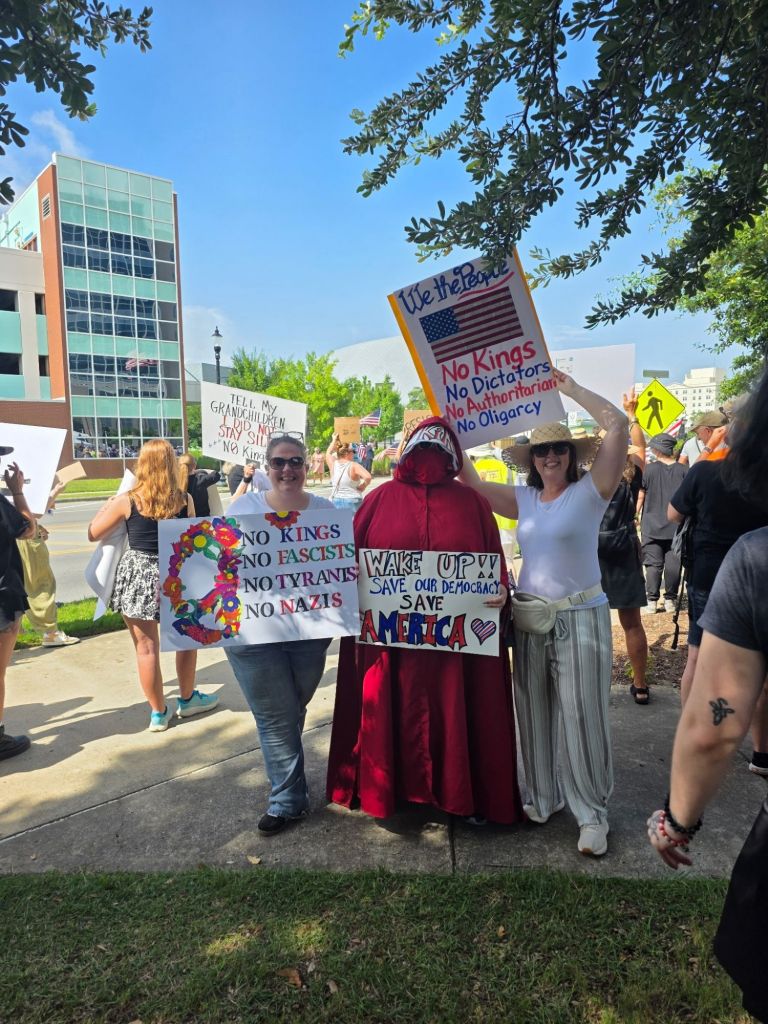
    He’s almost 88 years old, and yesterday, he joined 11 million people on the streets of America to stand up for the rights of immigrants and refugees and the preservation of our Democracy. He put on his “No Kings in America” shirt and rode his motorized scooter down the streets of his town with thousands of others. Because he still loves our country fiercely. He’s seen first hand what can happen when a power-hungry leader goes unchecked, and he doesn’t want it happening here.

    Love thy neighbor. Don’t talk shit about immigrants and refugees.

    They are people. They are human, and they’ve probably been through a lot.

    And if all else fails and you love me, but you still can’t convince yourself to support refugee resettlement and immigrants, remember, without the United States accepting Displaced Persons… I … go… poof…..gone.

    Fin.

  • In Love and War

    Some of the greatest things in life, come to us when we are least expecting it. They find us in the darkest of times, and bring light back into our lives. This is one of those stories. How my Omi found love again in the most unlikely of place, a Prisoner of War camp.

    “As the days passed by, most of the military had left Innsbruck. Life began slowly returning to normal. Mutti would go to work each day as a masseuse at the hospital, and each evening my brother Gottfried and I would run to the hospital to pick her up. On one of those occasions, Gottfried tripped and fell hard on some broken glass. His knee was split wide open, as if someone had taken a knife and sliced it right up the middle.

    In only a few seconds, blood was pouring out of the wound. I didn’t know what else to do, so I took off one of my long knee high stockings and we wrapped it over his wound. Despite our best efforts, his knee was still bleeding, now through the stocking. Fortunately, we were near the old military barracks that had been turned into a prisoner of war camp for German soldiers. A passerby suggested that we seek help there, because he knew that they had a medical staff.

    I had Gottfried put his arm around my shoulder for support, and slowly we hobbled over to the gate of the prison camp. A guard there took Gottfried inside, and I then ran as fast as I could to get Mutti. When she heard what had happened, she became extremely worried for now her son was not only injured, but also inside a prison camp. Her worries were soon calmed, when we arrived at the camp to see Gottfried emerging with his knee all bandaged up and a candy bar in his hand.

    Next to him stood a smiling German soldier in the uniform of a First Aid Corps man. “Keine angst liebe frau! (No fear dear lady)” , he said with an even bigger smile as he saw Mutti. The wound had been stitched up and cleaned, but the bandage would have to be changed a few times and then the stitches taken out, so we would have to return again.

    Mutti and the German soldier began chatting. He told her he was a corpsman from Riga Lithuania, and when Mutti told him we were from Danzig, he said he had been there many times. One of his friends knew her brother, so they already had something in common.

    This was how we met Walter Pein, the man who would become our step-father. He was a prisoner of war at the time. A tall handsome man, much taller than our father. His uniform was quite worn, but kept clean. And although his face was sunken in due to the lack of food at the prison camp, he always had a smile on his face when Mutti was around.

    Walter was considered a trustee at the prison camp, so on occasion, he would be given permission to go into the city and look for supplies that were needed at the infirmary. He took one of those opportunities to ask Mutti if she would join him on a date. He showed up at our gate with a smile and a bouquet of flowers. They would go on long strolls and talk about many things. On one of their strolls she had told him about the many friends we had in Tulfes, but could not afford to visit, because the cost of bus tickets was way too high. Two weeks later, he showed up at our door with tickets for all of us in his hand and explained that as a medic, he was able to get the tickets at a discount.

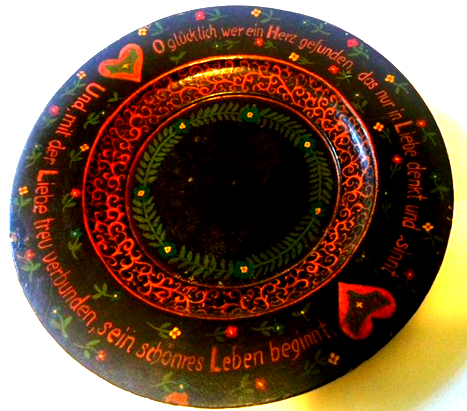
    Translation of inscription, “With True Love Together, His Beautiful Life Begins” Wooden plate, hand-made for Mutti by Walter at an old sawmill.

    Mutti had packed a little basket of home-made sweet bread and Walter had brought a couple oranges he had scrounged from the guard’s mess hall. We had so much fun, while Gottfried and I ran and played with our old friends, Mutti and Water sat on the balcony getting to know each other more. We returned later that evening, with the basked loaded with food. The villagers had gifted us many things, since they knew that food supplies in the city were extremely limited. I slept the whole way back to Innsbruck on the bus, while Mutti and Walter chatted and smiled the entire trip.

    “Lucky who has found a heart that only thinks and handles with love!”- Translation of writing on wooden plate made by Walter for Mutti.

    It was a good day, and for a moment the war was forgotten, and we came home with enough food to last a couple of weeks. It was there, that Mutti found love again with a Prisoner of War, my Step-Father Walter.” -Jochen

    Isn’t it funny how true love often seems to pop up from the most unlikely of places. Often in our lowest times. Especially second love. When the world seems too low to make it, here comes a person into your life when you least expect it that reminds you of things they you may have given up on having a long time ago.

    I find love like this so impactful. When it begins at a time where your world has crumbled, where you’re struggling to figure out everything. When love finds you at times like these, it’s truly beautiful, because that person falls in love with the real you. The raw, unfiltered, struggling you. The part of you, that may be hidden if things were better for you at the time. But when love finds you in times like this, you know it is true, because if they fall for you at your worst, their love will only grow for you as you become better together. They’ll never hold you to unrealistic versions of yourself, because they loved you and saw you through the tough times. This is a beautiful type of love. This is a strong love. When love starts at the bottom, and works together to claw their way up to the top as a team.

    fb_img_17494484110673533917616503480471
    True Love can weather any storm. It only makes you stronger.

    I’m living that type of love these days, after a failed divorce and a not so good long term relationship, I was at my worst. At my lowest, when love found me. Together we crawled out of the darkness and into the light. Together we work day in and day out to make our lives better and more beautiful. But on the days when things get tough, it’s okay, because we’ve both seen much worse, and we know we’ll get through any issue that may face us.

    The two greatest loves of my life: My Father and My Husband

    The timing of this post is ironic, as to why it was delayed.. As life happens, my husband had a health scare, and we spent three nights in the hospital, and as I found out, a hospital is a terrible place for writing. Way too many distracting beeps and people and worries. But all is well now and we are home. Just one of the things that we knew would be okay, because we’ve been through much worse together and we knew this was nothing we couldn’t’ also make it through this time.

    When love starts at the bottom, nothing can break it, because of the strength it took to make it just to begin.

    Once again, thank you from the bottom of our hearts for taking the time to read his story. Every time he learns about the people that are reading, sharing, or enjoying his stories it gives him great joy. Watching the statistics steadily climbing each week, we are honored. Please continue to subscribe if you haven’t already and share with others who you think may enjoy. Living historical documents like this are truly hard to come by, and we’d love to reach as many people as possible, to learn from his life. It’s only just begun.

    Love,

    Verina

  • Innsbruck and the American

    “After obtaining travel papers, we made our way out of Germany, through the Alps and into Austria. Mutti had lied about us having a place to stay in Austria in order to get the papers, but had us head into the mountains over Innsbruck because she had been there once with my brother Gottfried when he was having troubles with Asthma. At first, we stayed at a large farm, but were told that it could only be temporary because their own family was returning to stay with the farm owners until the war ended. Many refugees like us had flooded the area, hoping to get away from the major fighting and find a safe place to stay until the war was over. Germany had annexed Austria at this time, so despite having left Germany, we were still in an area under German control.

    Each and every day Mutti took us for long walks through the mountains. I believe she was attempting to get us stronger in case we had to escape once again by foot to get to Italy and once again away from whatever danger there might be.

    On one of those occasions, I took off by myself and found an elderly man living in a hidden cave. He sat me down and explained that I could not tell anyone that I had found him and that he was living here. He said that he would be considered a Partisan, and the Gestapo would come and arrest him. I swore to not tell a soul and was even scared to tell Gottfried. The man I had stumbled across was considered a deserter for not wanting to be part of the German Army. I never told anyone and kept the mans secret.

    One day, on one of her walks through the mountains Mutti met a pastor who offered us a place to stay in his apartment.  There was no furniture so we slept on the floor, and to keep warm Mutti rolled me into a small carpet.  I got warm fast but could not move my arms and still feel claustrophobic thinking about it.  

    One night, we woke up to sirens blaring. The loudspeakers told people to seek shelter in the basements, so we rushed down, like we had done before in Danzig, to wait out the bombings. The people here were very scared, as they were not used to it like my brother and I were. We had spent many nights in Danzig, sheltering in cellars, so we were not nearly as bothered by this event as others and soon got extremely bored.

    After about 20 minutes, Gottfried and I decided to sneak upstairs and see what was happening. I opened the door just a crack and at first all was peaceful. We sat and played in the doorway, when all of a sudden we heard a loud rumble in the distance. Then we saw it, about 4 or 5 houses down an American Army tank coming around the corner shooting at both sides of the street. Bullets were bouncing off the entrance where we had sat. Gottfried slammed the door and we ran back down to the basement as fast as we could with all the adults screaming at us.

    We sat again for a while, but the sound of gunfire had stopped, and once again I got bored sitting in the basement. Soon, we decided to creep back up the stairs while nobody was paying attention. We made it to the top of the stairs, when all of a sudden the door crashed open! Standing before us, was the biggest black man I had ever seen with a machine-gun pointed directly at Gottfried and I. I saw what looked like granades clipped around his belt.

    “Where are the soldiers!”, he yelled in German. I was so terrified, that I couldn’t move and immediately wet my pants. Gottfried bolted downstairs into Mutti’s arms and she somehow convinced this American soldier that there were no German military people in the apartment. Later, another group of black soldiers from French Morocco searched each and every room for German soldiers.

    It was May 9th, 1945, and now the city was in the hands of a large Black American Regiment and a number of small French Moroccan companies. Since these were the first American soldiers I had seen since the war began, I was completely convinced that all Americans must be black.

    Once the sun rose the next day, some American tanks, military trucks, and jeeps drove along the avenue as people cheered in the streets. Austria had been liberated from the Nazis.

    That same afternoon I watched as big trucks rolled to the center of the avenue to set up a field kitchen. After a short while, the smell of the food cooking drifted towards us, and we decided we had to investigate. It had been so long since we had had any good amount of food and we were always starving.

    A large gong rang, and soon we were totally surrounded by American soldiers who came from all directions. I was still focused on the roar of the oil fire under the cooking trailer that sounded just like a jet engine, when one of the soldiers grabbed my hand and made me hold this big tray.

    “Hey there Son! You sure do look hungry! Where is your Mama? Here, hold this trey!” It was the same giant soldier from the night before who had scared me so badly, but this time smiling a big beautiful smile with a thin piece of wood in between his teeth. This intrigued me, as I had never seen a toothpick before. He walked me towards another American soldier who spoke German and explained to me,

    “The sergeant here wants to tell you that he is sorry he scared you so much that you pissed your pants the other night. He’s got a son around your age back home in the states and feels bad. He wants to make it up to you and give you his food rations for the day. Here little buddy, have a prize from me also. Stay in line, and don’t let those big guys push you around.”

    He handed me something wrapped in paper, that I later learned was chewing gum. Then the cook piled the trey high with Fried Chicken, mashed potatoes, peas, and a slice of white bread, as well as a canteen cup of vegetable soup. I could hardly carry it all and could not believe my luck! We had not had that much food once since leaving Danzig!

    I asked if I could go share it with my brother, who was watching me from outside the circle of men, and was instructed to bring the tray and cup back right away as they would be moving out shortly. I hurried across the street towards the apartments with Gottfried at my heals. As I stepped onto the sidewalk in front of our home, a mean looking German man in a trench coat stepped out in front of me and struck my tray with his fist.

    “We Germans do not accept food from the enemy!” he shouted at us as our food flew every which way. But Gottfried and I did not hesitate to bend down to salvage everything we could from the ground. The American soldier who had given me the food came running with a number of the others and immediately arrested the man who had knocked down our trey.

    We managed to save all the fried chicken and bread, and most of the mashed potatoes, but the soup and peas had been lost. We didn’t mind though, it was still a feast, and we split what we still had in three to share with Mutti when she returned from work. This was my first taste of fried chicken, and I love it so much to this day.  And I’ll always remember my first American Soldier!  I didn’t even mind the gritty mashed potatoes.”- Jochen

    This is one of those stories that I remember vividly. Laying in bed as a little kid, my Dad telling me a story at bedtime. I always pictured this big Black American Soldier who had scared him, then given him candy and food. What a wonderful and terrifying introduction to the Americans as World War 2 came to an end.

    Just last weekend, my husband and I watched the movie, “Red Tails”. It tells the story of some of the Tuskegee Airmen and how they had been all black airmen who helped with critical missions based out of Italy during the war, often escorting and protecting bomber planes.  It’s a fantastic movie if you haven’t seen it. But every single time I see anything  about black soldiers in WW2, I think of my dad and this story.

    Now, knowing that it was an all black group of American Soldiers in Innsbruck, I decided I wanted to see if I could find out any more information as to who the soldiers might have been.

    Imagine my surprise when I find that on May 9th, 1945, the most prominent all-black American squadron in the area would have been part of the 232nd Fighter Group, famously known as the Tuskegee Airmen. Although they were based in Italy, they operated extensively in the Mediterranean Theater of Operations, including missions over Austria. With the war officially over on May 8th, 1945, it’s highly likely that elements of the 232nd Fighter Group would have been in the vicinity or involved with post-conflict operations in Innsbruck.

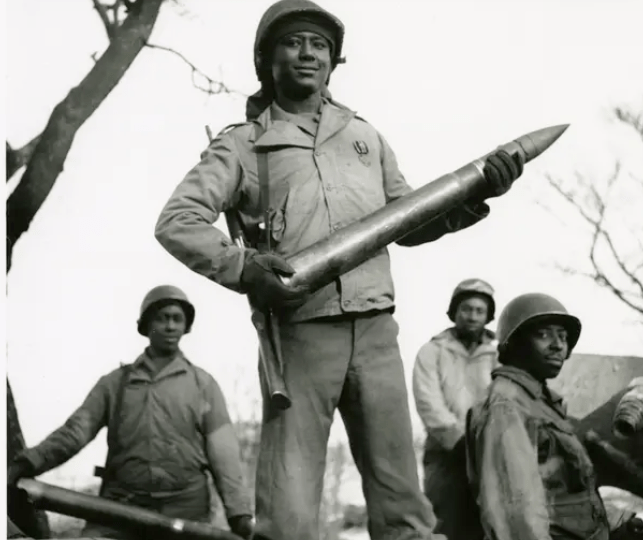
    Another possibility would be Company C of the 614th Tank Destroyer Battalion, an all African American squadron that had been attached to the 103rd Infantry Division who had been in Austria during the end of the war. On May 2nd, near Scharnitz, Austria, they lost 7 men of a task force that was pushing towards Innsbruck, their last casualties of the war. Company C, then moved to Telfs, Austria on May 7th where they rested until May 11th. Google tells me this is only about 20 km from Innsbruck. Could they be my Dad’s American soldiers? Were they joined by some of the Tuskegee Airmen? I find it fascinating to wonder about, and will continue to research more on this.

    I’ve always wished I could know who the kind man was so I could thank his family for feeding a starving little German boy that day. My Daddy.

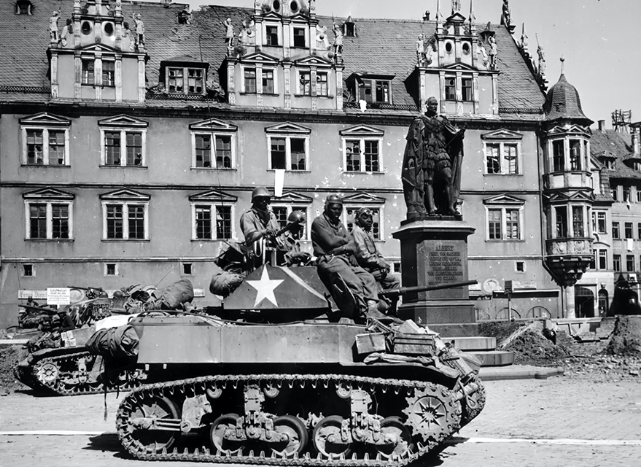
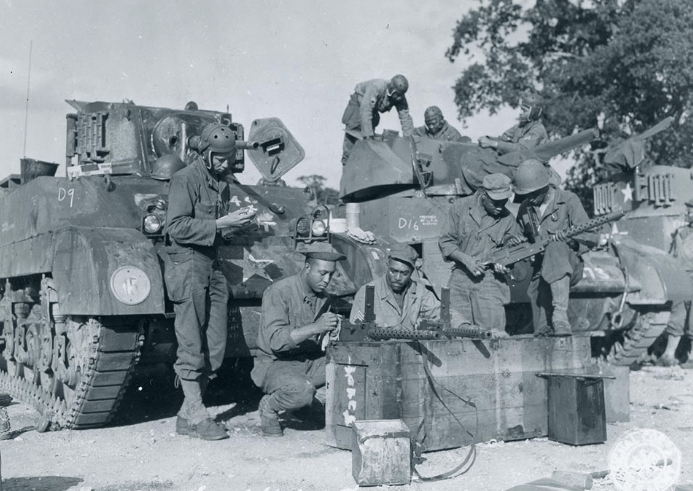
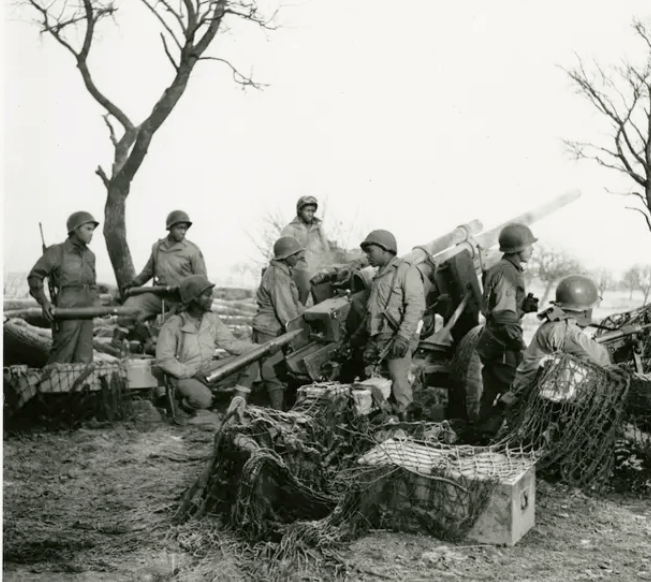
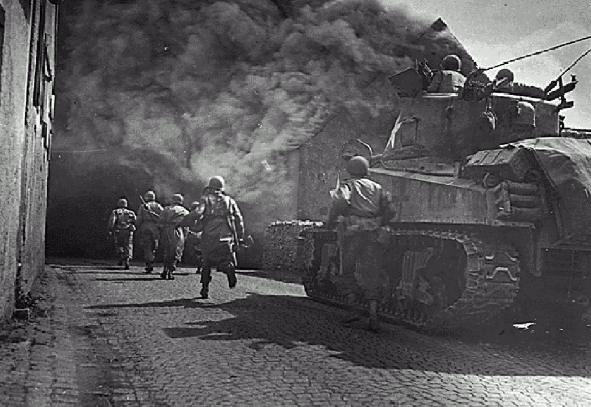
    The pictures below are some of the soldiers of the 614 Tank Destroyer Battalion.

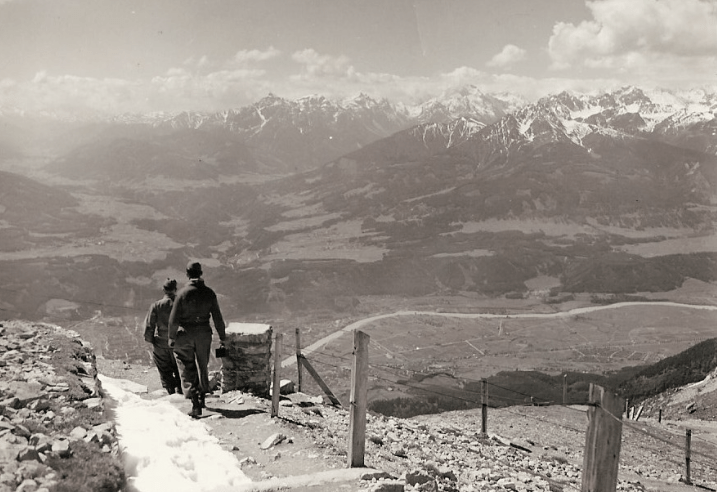
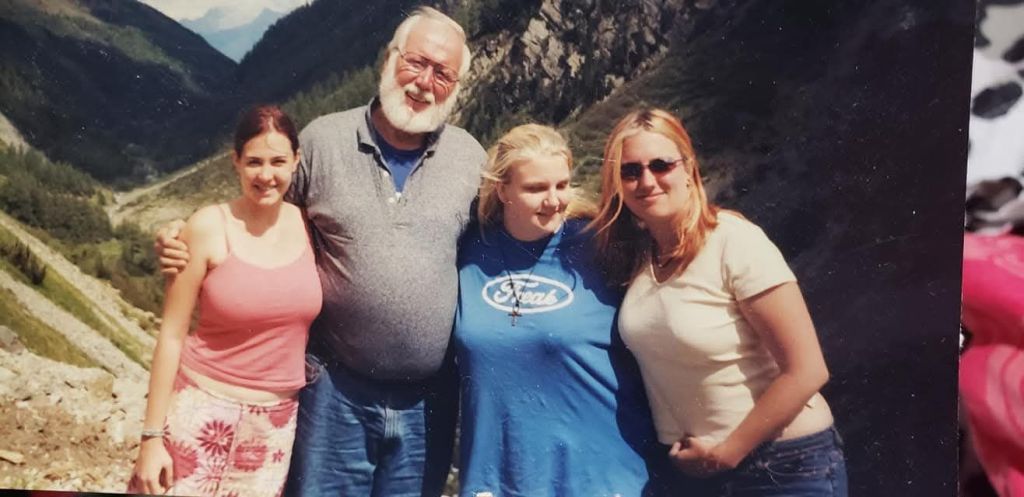
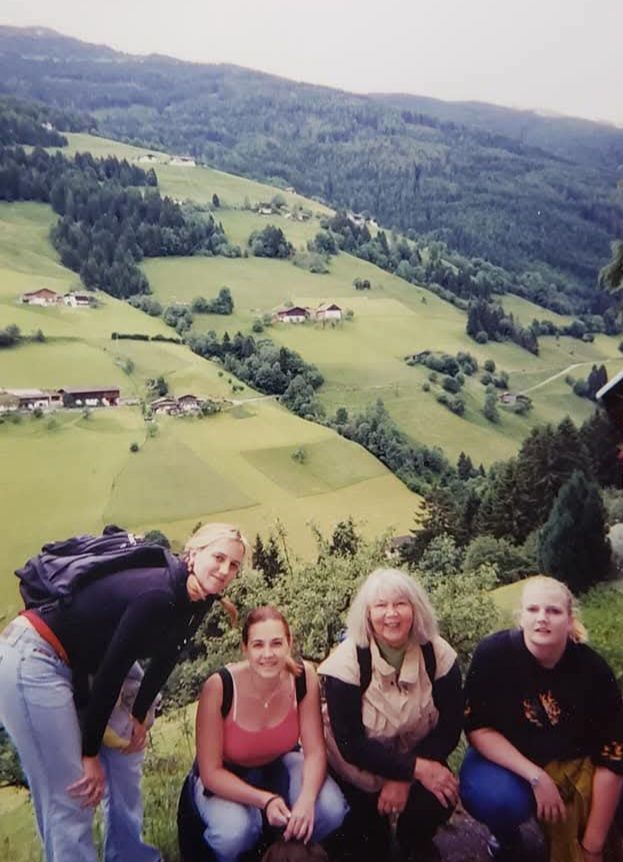
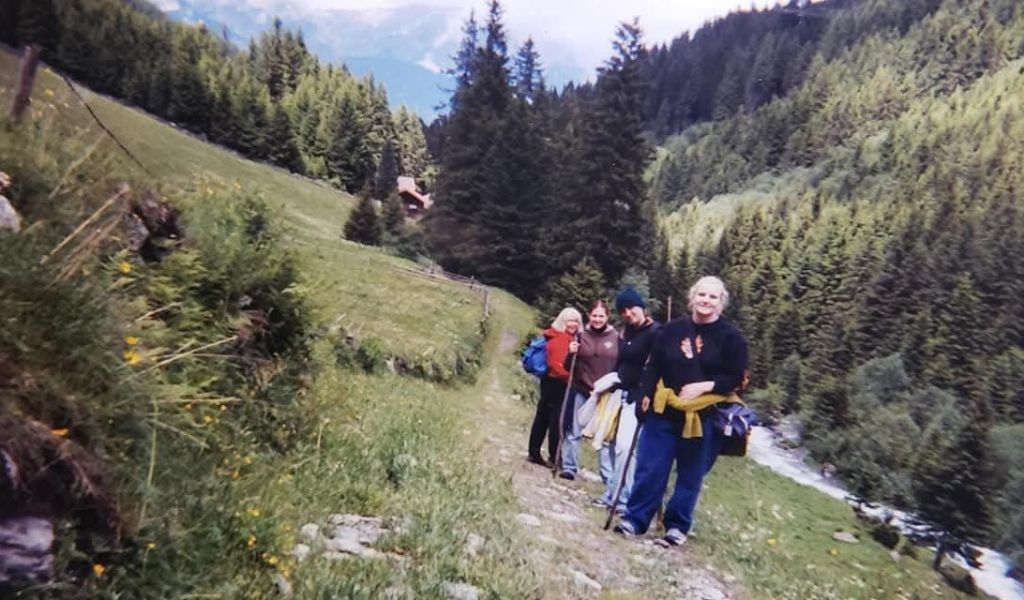
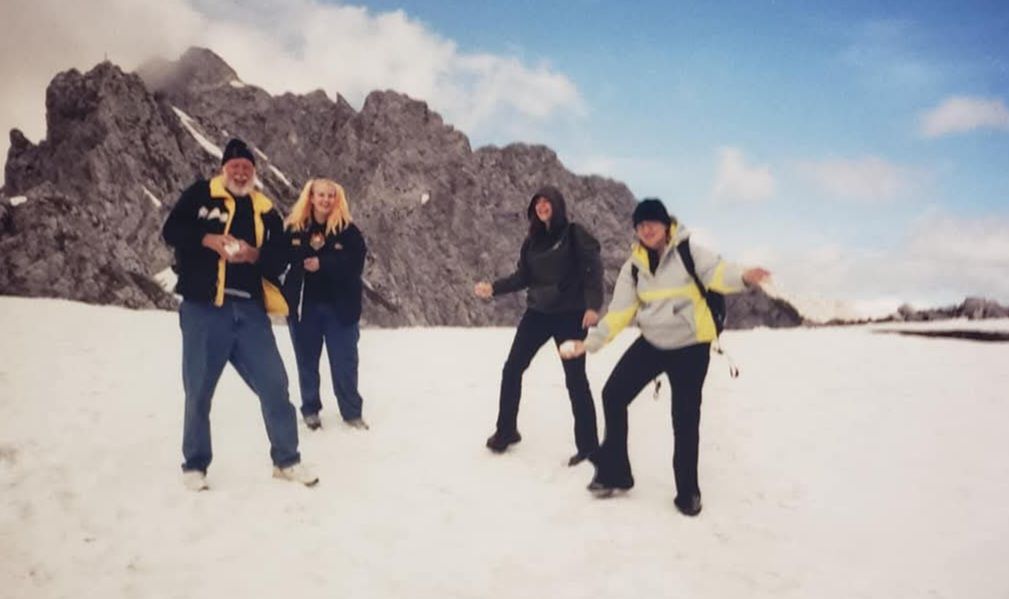
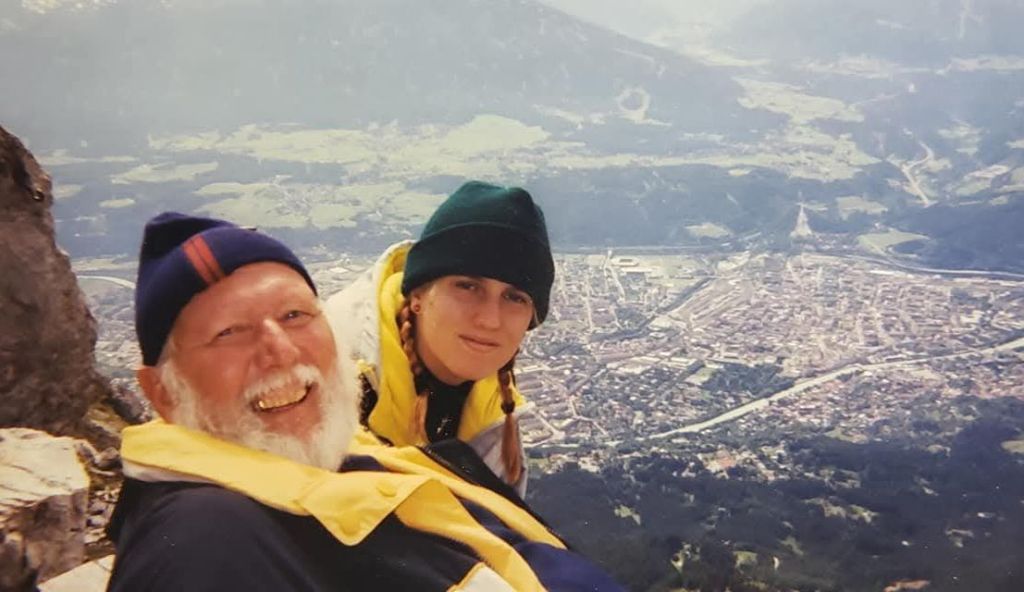
    On a personal note, this is one of the European story locations that I’ve actually gotten to experience with my own eyes. When I graduated high school, my father and step-mother Sandra took me and two of my best friends for a month long trip through Europe. While on our trip we got to experience Innsbruck and stay in a nearly village. It was incredible! We hiked through the mountain, we rode to the top of massive mountains and viewed the world from up high. It is an amazing area, and my friends and I will never forget our time there. I can only imagine how wonderful it must have felt to get out for the rubble filled cities and up into the Alps where the fresh air and mountains could start to heal their war broken hearts.

    fb_img_17484097406095249193608504158743
    fb_img_17486690518258352670969102634492

    Oh how I’d love to be back on top of that mountain again with my Dad! At least we have incredible memories of our trip to Austria long ago, and for him, the Big Black American Soldier who let him know the war was finally over!.

    ….. sort of… well at least that is what they said, but the rest is for another story.

    But lastly, while researching for this week’s story I found an incredibly interesting story about “The REAL Inglorious Basterds” (yes, as in reference to Quentin Tarantino’s 2009 film), who played a major part in helping Innsbruck be peacefully transferred over from the Nazi’s at the end of the war. I’ll let you read about it yourself here if this intrigues you. Check out the link below for more on that side-story that probably saved my Dad and his family from facing more fighting at the end of WW2.

    https://www.nationalww2museum.org/war/articles/operation-greenup-real-inglourious-basterds

    Once again, thank you so much for reading. We hope you enjoy! Make sure to subscribe so you don’t miss any future stories. There is so much more to tell!

    -Verina
  • Himmler’s Curtains

    “We had finally arrived at our destination of Gmund am Tegernsee Bavaria after 5 days on the train from Berlin. We were grateful to have arrived at all, after having narrowly escaped repeated attacks on our train that had only held women and children. I guess that it hadn’t mattered, it was a German train, and to the Allied Forces we were the enemy.
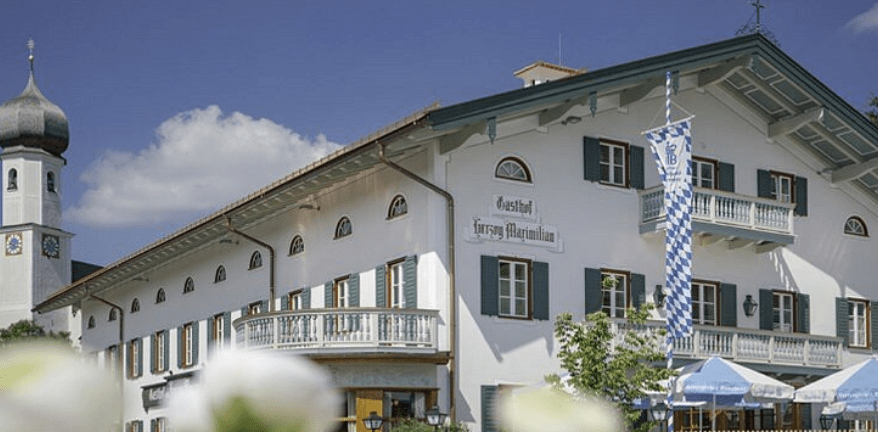
    Upon arrival, all passengers of the train were interviewed and classified into different groups. Even though our parents had divorced years before, because our father was a member of the Nazi party and a Haupt Sturmbannfurhrer in the Waffen SS, we were given some special privileges. Mutti, my brother Gottfried, and I were allowed to stay in the attic of a hotel in town called the Maximilian in the center of town.

    Although we had a place to stay and we had chosen the least expensive room, we were still expected to pay for us to stay there. Mutti had very little money, so she took a job in the kitchen in exchange for our lodging. We were happy to be out of Danzig and away from the war, but Mutti did not like that we had to be affiliated with the SS people here at the hotel which had been commandeered to cater only to SS, Nazi officials, and their families.

    Food shortages were now all over Germany, and once we left Berlin, our food was gone. Everywhere people were begging for food, but Mutti kept us fed better than anyone else by saving the peelings from the vegetables that were served at the hotel. We survived mostly off of carrots and potato peels that she would cook into a vegetable stew for us on a small smuggled burner plate in our room. It wasn’t much, but it was better than nothing.

    Often the cooks needed extra help and would ask us boys to help wash dishes. One time, when no one was looking, I was so hungry that I decided to try and steal a slice of hard bread. No one was in the kitchen, so I hurried in and grabbed a big kitchen knife to try to slice a big chunk of bread. The knife slipped on the hard crust, and instead of a slice of bread, I sliced my left thumbnail right through the middle. I was bleeding like crazy and knew that now I would be in BIG TROUBLE! I used a kitchen towel to try to stop the bleeding and squeezing my thumb back together, quickly finished slicing my bread and ran full speed from the kitchen into a wood shed out back where I hid and gobbled down my stolen prize as quickly as I could. Hard bread soaked in my own warm fresh blood now filled my empty belly.

    I bandaged my thumb as best I could and wore gloves to hide the injury from Mutti. I bribed my brother Gottfried with the last chunk of bread to keep the secret of what I had done. I was still terrified that my crime would be caught and I would be punished, but next time I saw the cook, he only looked at me and winked. From then on, the head cook would always give Mutti extra left over food with a smile. “For your boys”

    We were safe and had a roof over our head, but we were still surrounded by people Mutti did not want us to be influenced by. My brother Gottfried was getting close to the age where he would have to register for the mandatory entrance to the Jungvolk, which you may know as Hitler Youth. This was mandatory for all children aged 10-14, and Mutti wanted to get us out of Germany before her son would be forced to participate in something she was adamantly against. In those days, you couldn’t just travel out of the country, you had to gain travel papers, which we did not have, so she would need to find some way to get us out of the country and away from the programs that would seek to indoctrinate her children into believing the ideas of the Nazi regime.

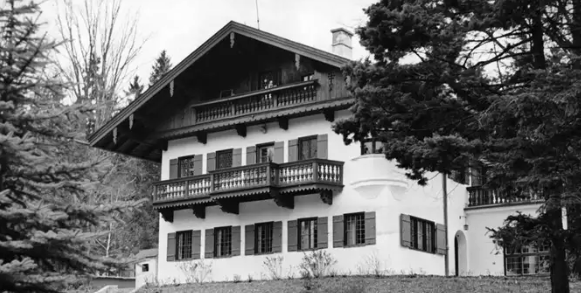
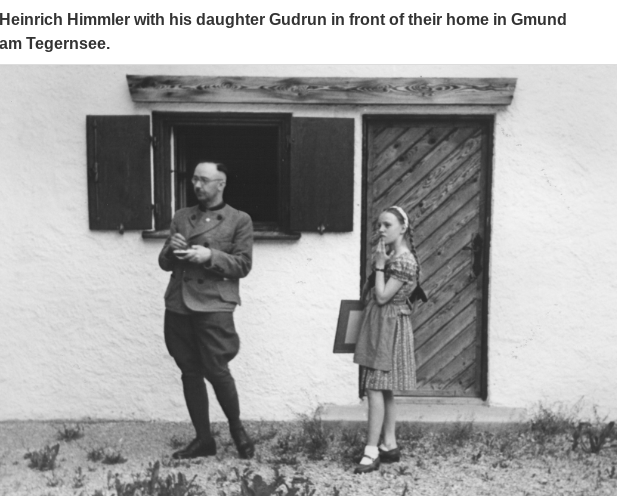
    One of Mutti’s friends, another refugee who was a seamstress, had been asked to go to the cottage of Marga Himmler to sew some curtains. Yes, Marga HIMMLER, wife of the notorious Nazi leader, Heinrich Himmler. She asked Mutti to come along and help hold up the curtains as they were being fitted. Mutti agreed and took this opportunity to ask for help procuring travel papers to Austria. She knew you had to know someone with influence to get permission to go anywhere, and this was her chance. Mrs. Himmler agreed to help, and made sure that we got the documents that were needed for us to leave the country.

    Mutti had found us a way out of Germany and into the Alps of Austria. She hadn’t had to make a deal with the devil, but she sure had to help make curtains for the “devil’s” wife. But she did what had to be done to get her children out of Germany and away from having to participate in Hitler’s Jungvolk. Although from the outside, it only looked like the Boy Scouts in America, she knew that it was not something she wanted either of us to have to take part in.”
    -Jochen

    I went into this story thinking I’d be reflecting about the starvation and the survival off vegetable peels and stolen bread, but the more I read and researched, that no longer seemed as important as who they were surrounded by. Who had gotten them out of Germany.

    This week’s story didn’t bring me to tears, but instead made my blood pressure rise and my stomach feel a little like throwing up. The town they had gone to was a favored place for many elite Nazi officials. And although I said I haven’t seen any documentaries that tell what my father went through, I’ve seen plenty of documentaries about Heinrich Himmler. Turn on the history channel right now, and you’re likely to find one nearly any day of the week. Having to read and write about my Omi’s encounters with his wife just filled me with rage. She helped them get out of Germany, which is a good thing, but she did so with the help of someone who was married to a monster.

    If you don’t already know, Heinrich Himmler was a powerful Nazi leader known as the “Architect of the Holocaust.” He was the Chief of Kriminalpolizei (Criminal Police) and Minister of the Interior. Which means he also was the head of the Gestapo and the Waffen-SS, of which my grandfather was a part of. As the principal enforcer of the Nazi racial policies, he oversaw the concentration camps and extermination camps, playing a role in the death of millions of Jews and others.

    He was one of the truly evil German men.

    I will never stop being grateful for my Omi (Grandmother) for doing her best to protect her children from believing in the ideas of the Nazi Party, despite her ex-husband being a part of the Waffen-SS.

    I looked up what a “HauptStrurmfuehrer” in the Waffen-SS was, in my quest to learn a little more about the man I never met, killed by the Russians in the Battle of Budapest, who’s life choices have always been a cause for much inner turmoil. HauptStrurmfuehrer translated into Head Storm Leader. A Nazi Party paramilitary rank, a mid-level commander with the equivalent seniority to a captain in foreign armies. He’s buried somewhere in a mass grave in Budapest.

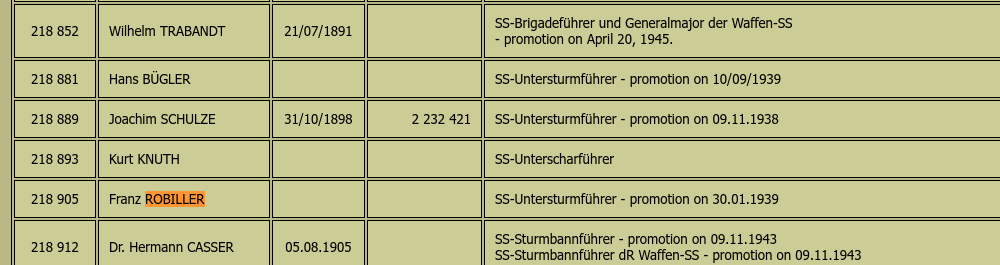
    In doing my research, I actually found his SS number, the one my father hated that was tattooed on his arm. There he is, Franz Robiller, my grandfather, SS #218 905.

    I need a drink. That’s all I can take for today.

  • A Cattle Car from Berlin

    We are hopping back across the ocean and back in time for this week’s episode. As I mentioned in the beginning, this blog will not always go in order. Eventually, I hope to use these stories in the composition of a book which I promise will be in a more chronological order, but for now excuse us for bouncing around as we tell our story.

    So, grab a coffee, cozy up, keep the tissues nearby, and let’s dive back in to the events that led to my father to become listed as a “displaced person” the first time.

    Take a trip with us back to Berlin, January 1945.

    “We had made it out of Danzig on the train, but we were not yet out of danger. The Russians were steadily advancing in that direction from Poland, and the threat of nightly air raids were constant from the Allied Forces. Fortunately, once again Mutti heard of another train that would be departing Berlin for mothers with children. We could not believe our luck, until we saw the train.

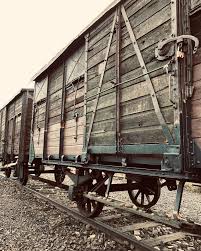
    The train was made up of only a few cattle cars, nothing like the regular train cars that we were used to riding in. I remembered seeing similar railroad cars arriving at the prison camp in Stutthof, Poland when we had traveled to spend time at our Uncle’s farm in East Prussia. Nervously, we were loaded into the cars, while the engineers and conductors checked to make sure each car had at least 50 people. The small ventilation windows along the top of the car had barbed wire nailed over them, which frightened me, but there was no other choice. The conductor suggested we find a spot with a lot of straw, that we could use for bedding.

    Over the next five days we would slowly travel across the German countryside, stopping only to find food and avoid attacks from the Allied Forces. We had only a bit of straw beneath us for our bed and later a tin can which became a chamber pot when Mutti was unable to leave the train car to use the bathroom.

    The doors to the cars were kept open at all times, so that when under attack, we could quickly hop out and run for cover. This was a frequent occurrence, and during one of those occasions a French fighter plane began making passes targeting the train with machine gun fire. We jumped and scrambled to find cover, Mutti screamed and crawled next to us behind the large wheels of the train. We cried at the clatter of the machine gun thinking Mutti had been hit. She assured us she was fine and had only sprained her ankle. I pressed myself as low as I could on the ground behind the rail. As the clattering above continued, I felt a sharp sting on my back, but too much was happening to give it any much thought.

    Once the immediate danger had passed we hopped back into the cattle cars and continued on our way. It was not until the following day as I was undressing that I found a large bloodstain on the back of my shirt. Shrapnel from the machine gun fire was lodged in my back, and to this day I still have the scar. I was scared, but since I didn’t feel much pain from it, I kept quiet about it so as not to add to the problems Mutti had to worry about with her injured ankle.

    After 3 days of starving with no food, the conductor stopped the train as we were passing fields of beets and carrots, and Gottfried and I ran and gathered whatever we could as quickly as possible to take back to the train to eat. We had to be quick and stay close to make sure that we would not be left behind if it began moving again without notice.

    We could no longer safely travel during the day once we left the countryside. The risk of attack became too great, so we traveled under the cover of darkness once we reached the industrial parts of Germany. One day as we waited, my brother and I cleaned out Mutti’s chamber pot as best we could and having cut up the beets and carrots we found earlier, cooked a stew using water that dripped from the train engine. This warm meal greatly impressed our mother despite having a lingering taste of engine fluids which I will never forget. We had made a fine feast as we neared the end of this tumultuous journey.

    The trip that normally took 7 hours to travel from Berlin to Gmund an Tegernsee by train, ended up taking us 5 days. By the time we arrived, Mutti’s hair had turned from dark brown to stark white. She was 38 years old. It would remain white the rest of her days. – Jochen

    Full disclosure, I had to stop and take a break less than a third of the way into writing this story for about half an hour to compose myself. I know this story, I’ve read and heard these words, but having to put my father’s experiences in my own writing is different. It’s hard to write his story without putting myself in his place, picturing each event and trying to think of how it must have been like.

    But today it wasn’t his story that got to me. It was the others. The ones who came before. The ones who didn’t live to tell their stories. I looked over my Dad’s emails, and reread the pages of his book, and couldn’t get past the description of the Cattle Cars with Barbed Wire windows. I went to the kitchen and wept.

    How do you tell the story of how your father had to travel in the same cars where thousands were taken to their death camps? How do I explain their struggle without acknowledging the fact that for as horrible as they had it in World War 2, they were the lucky ones? These cattle cars would take them through incredibly dangerous scary traumatizing experiences, but it is nothing in comparison to the people who were taken to the camps. My father’s beautiful blue eyes and blond hair and strong German heritage was his ticket to be given a chance to survive.

    While my father, uncle, and Omi narrowly escaped attacks by both the Allied Forces and the Russians, millions of Jews were killed by the Nazis. In addition to the Jews that most learn about, also homosexuals, black people, people with disabilities, ethnic Poles, Roma, Soviet POW, and people who opposed the Nazi Regime were also imprisoned and executed in mass events.

    Over 60,000 people were killed at Stutthof Concentration Camp which was about 22 km from my father’s hometown of Danzig. It began as a civilian internment camp of non-Jewish Poles, which transitioned into a forced labor camp, and then finally a concentration camp. At the time, my father was totally unaware of what was happening to those who were sent there, as were most Germans. All they knew was that men with machine guns guarded high barbed wire fences, but never what happened beyond those walls.

    Please know that in telling this story, I mean absolutely no disrespect to those whose family members suffered far worse fates than my own. They say, “history is written by the victors”. So what happens when your family were children of the ones who lost? Where does my father’s story fit into the pages of the history books and documentaries or does it fit in at all? They only ever taught us about the really evil German men, but I never heard anything about the scared little children or their resilient mothers in school. For this reason, I kept the details of my family’s history hidden for the majority of my life from all but a few of my closest friends, never wanting my father or Omi to be lumped in with the really evil men.

    This is my goal for this blog. To tell my father’s story, so that it is not lost, and you have the opportunity to learn more than you were taught in school or on television. To make this blog and the eventual book a document that others can read and learn from. It’s not made up or imagined. It is not anyone’s opinion about what they think or was told happened. Things have not been removed to make any side look better or worse. It is a first-hand account of what it was like to live through and survive World War 2 as a German child. Although I assist with editing and revising his words, I never change any events and the facts of his life and experiences.

    We cannot change the past, but we can learn from it, and I hope this helps. Maybe if more people had learned that it wasn’t so black and white, it wasn’t so simple, it didn’t all happen at once, and it wasn’t all over when the war was, we wouldn’t be seeing some of the things we are seeing happening today.

    Please let me know if you have questions about anything discussed in this blog. I apologize if these topics are hard to read about and reflect on. I am happy to find out more and ask my father anything not covered in his story. We truly appreciate each and every one of you who takes the time to read. Thank you from the bottom of our hearts!

  • New York, New York!

    “Give me your tired, your poor, your huddled masses yearning to breathe free.”

    Ten days across the ocean had passed. Finally, in the distance I caught the first site of the coast of the United States, this place I had heard and dreamed so much about. I had made it. This was the day!

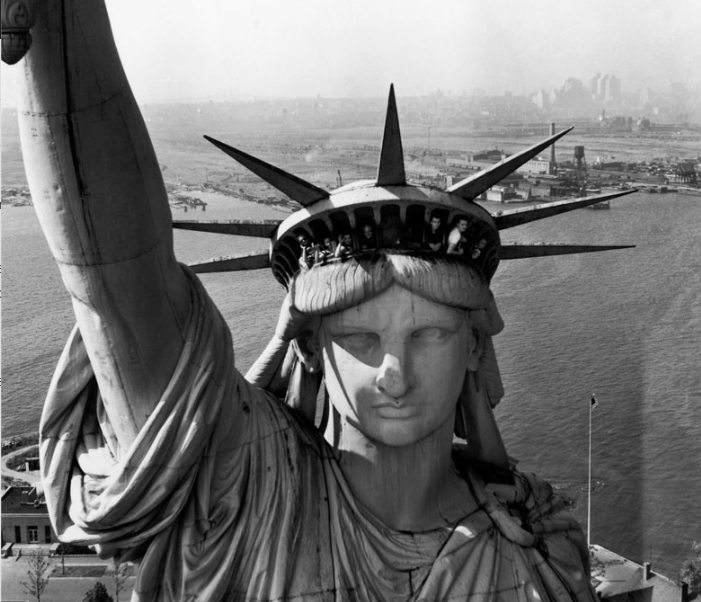
    Pulling in to New York Harbor was quite a sight to see. So many ships and ferries were coming and going from every direction. Heading upriver on the Hudson, we saw the famous “Statue of Liberty” that we had all heard so much about. We all crowded on to the deck looking over the left side to catch a glimpse of her. Was this place really all that we had heard it was? I was now so far from home, from Mutti, from the rest of my friends and family except for my brother Gottfried who had arrived a few months before.

    Soon, there was an announcement for all passengers to line up with our luggage for debarkation. In all of the excitement of our arrival, I had totally forgotten about the pay that the cook owed me for my assistance on our trip over. Fortunately, the head cook found me in line and pulled me to the side to hand me an envelope. It seemed and felt much bigger and heavier than I expected for my wages. Excitedly, the cook explained that they had taken up a collection for me in the kitchen and wanted to wish me well in America! The envelope was loaded with all kinds of money and change which I would later count to be over fifty dollars. This was a lot of money in 1956 and I could hardly believe it. I thanked him and his kitchen gang over and over, as I knew this would be a great help as I settled into America over the next few days and weeks.

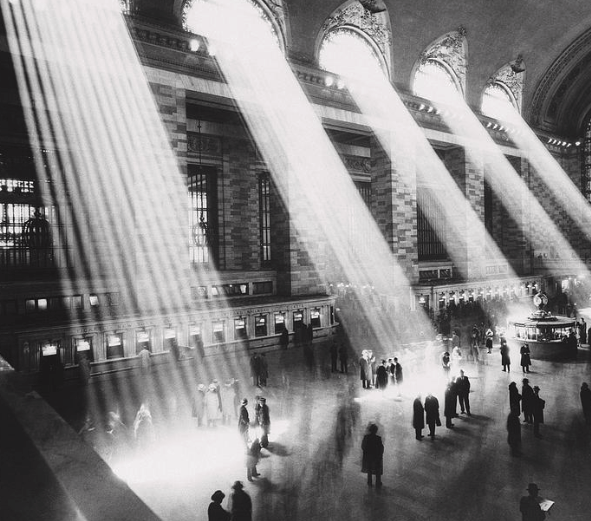
    I only had two small bags and because I was out of line talking and thanking the cook, by the time I got to the immigration control they had closed for lunch. Normally, this would not have been a problem except I had given my bags to a group of other passengers that had told me they were also going to Grand Central Rail Station and the porter would take all the bags together there. I couldn’t leave until I went through immigration, but now my bags were already gone!

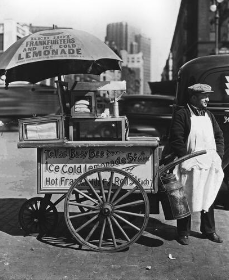
    An hour went by before they returned and I finally got immigration approval and my green card. All alone again I walked out into the United States of America! The sidewalks towards the station were filled with vendors of all sorts. I asked one of the vendors for directions and he smiled and handed me a hot dog! What?! My first American hot dog! I was happy, but worried about my bags.

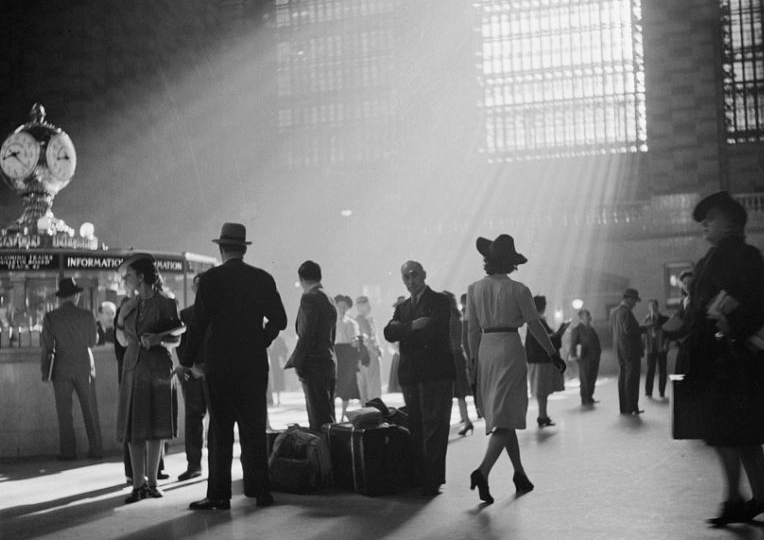
    When I got to Grand Central Station I asked again for directions but was told,
    “it’s easy, just listen.” So I tried, and out of the loud speakers blared, “Kreissst no stat Boston” What? I tried listening better but could not make out what was being said. “Bbbrai abus gbrrazz Boston” What?? My two years of English failed me so I just started walking around.

    Coming to one of the platforms I could not believe my eyes. There were my bags sitting in the middle with people all around, and not a single person touched my bags. Unbelievable! It was 1956 and I could hardly believe this was how honest Americans were in those days!

    The train to Boston came on time and my brother and his sponsor Mariner Air picked me up. I was totally exhausted, but as happy as could be on my first day in America! – Jochen

    My father’s story is everything you’ve heard about those who came to America seeking a new life. That first sight to the Statue of Liberty to welcome them to their new home. “Give me your tired, your poor, your huddled masses yearning to breathe free.” He had already lived through so much in his home country. He had seen what can happen when evil, greedy, men take over a nation. He had lived what happens to a country afterwards when those evil men failed, leaving behind the ruins of war and the shame of what wrongs were done in the German name. Now was his chance to start a new, to leave behind the past and the war and all of it, and make something for himself in the land of the free!

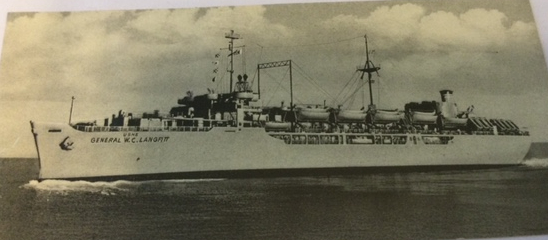
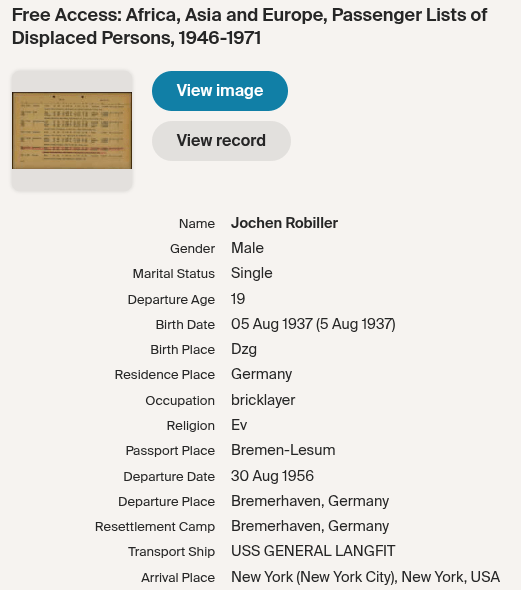
    The first picture is the actual ship that my father took to America. The USS General Langfit, on August 30th, 1956 from Bremerhaven, Germany to New York, New York USA. His sponsor was Milton Babcock from Suffolk County, Massachusetts who was part of the Lutheran Church who sponsored war refugees.

    The Lutheran Church in the United States played a significant role in sponsoring German war refugees in the 1950’s. The end of World War II left millions of people displaced in Europe, including many Germans who had been expelled from Eastern Europe or had lost their homes. Local Lutheran congregations often played a vital role in sponsoring refugee families, providing housing, financial assistance, and community support. The passage of the Displaced Persons Act in 1948 in the United States opened the doors for many European refugees, including Germans like my father. This act, and subsequent amendments, allowed for the admission of hundreds of thousands of displaced Persons.

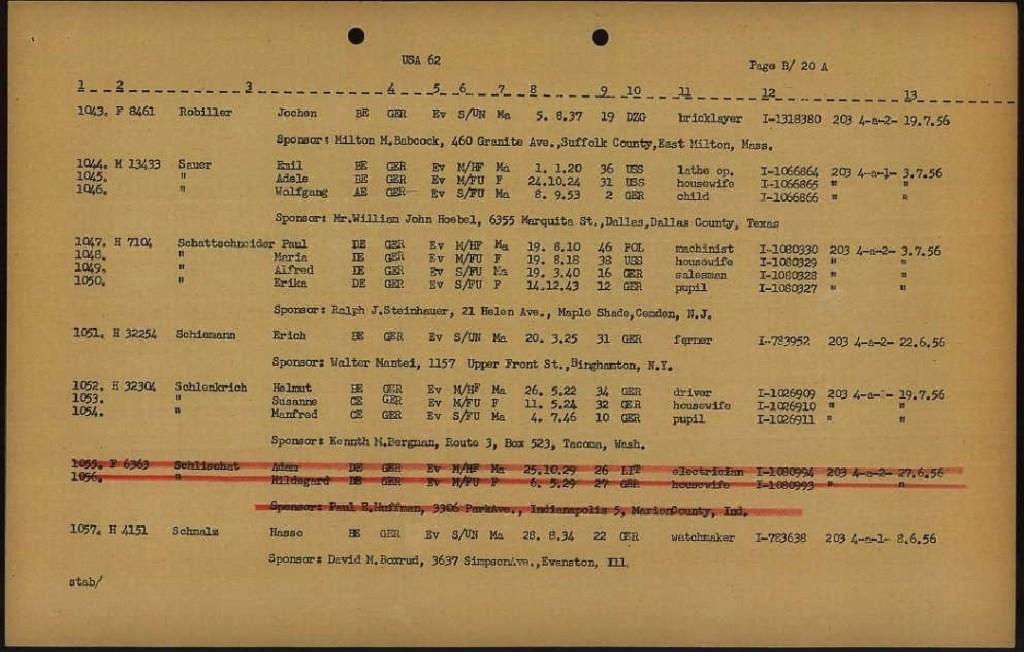
    This is where I found the document that is included in “Coming to America”. It is so fascinating, not only hearing first hand accounts of this journey, but finding the actual documents that went along with this. He was not just on any ship coming to America, he was on a ship of “displaced people”. He and everyone on that ship came into this country ready to rebuild their lives, with sponsors all over this great country.

    They came with a dream, they came seeking freedom, and they came for a better life in a country they heard so much about after the end of such a horrendous war. I don’t have to tell you why my father’s experience as a refugee or displaced person multiple times throughout his life makes turning on the news these days incredibly hard for both my father and I.

    To hear of refugee resettlement being stopped and the terrible ways refugees and immigrants are being treated and spoken about in our country now is absolutely heartbreaking, and goes against everything my father and many others read as they first entered this country as hopeful “displaced Persons”

    “Give me your tired, your poor, your huddled masses yearning to breathe free.”

    What has happened to this message in America? What has America become where we turn our backs to those in search of better lives after experiencing atrocities most can’t even imagine?

    I feel that if a statue could cry, today, she would be weeping.

  • Coming to America

    We are fast-forwarding in time to my father’s journey to America. It’s the 1950s, Germany is still recovering from the damage left by the war, and my father, now a teenager, dreams of life across the ocean.

    “American music blares from the speakers, our favorite. American rock-n-roll was the biggest craze and we couldn’t get enough. My friends and I were mad at the world, and especially mad at our parents! How could they have let that sick man take over and destroy our beautiful country? How could they have supported Hitler and stood by while he committed such atrocities against fellow humans? Everywhere we turned were reminders of what had happened in the 2nd World War. We couldn’t wait to get away.

    My stepfather Walter had talked me in to accepting a three year contract to learn how to be a brick layer when I was 15. I had talked a big game that I would be an architect, despite them saying I was “ein halb starker” or only half strong. Basically, what American’s would call a teenage punk. I had moved to the big city of Köln for the apprenticeship, which had given me experience away from my parents and friends to focus on learning my trade. After three years at a technical trade school, I was ready to go out on my own, and I yearned to get a piece of the American Dream that I had heard so much about.

    After 8 months of applying at the U.S. Consulate, my brother Gottfried and I finally got permission to immigrate to the United States. A U.S. church would finance our trip to the United States aboard a U..S. military transport ship. The trip cost was about $150, which we were obligated to pay back within one year. We planned on going together, but as we came to the ship in Bremerhafen only Gottfried was allowed to board. I was a few months shy of my 18th birthday, and turns out I would not be allowed to go until my 18th birthday had passed. I couldn’t stand this ridiculous rule, and hated bureaucracy from that day forward as I watched my brother sail off to America without me.

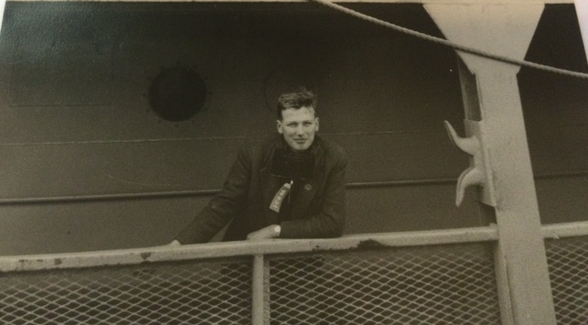
    A month or so later it was my turn. The troop transport ship only had below deck sleeping bunks and I was assigned the top bunk, 4 bunks up! I half-slept there the first night, but could not stand the stagnant stench of the 150 men cabin. Once we were underway, I went immediately to find a place outside where I could sleep unnoticed and unbothered in the fresh ocean air. I found just the place, while crawling under a machine gun platform on an upper deck. It was perfect for me, and besides it being a bit hard on my back, it was a great improvement from the cramped and stuffy bunk below deck.

    The journey would take 10 days, and I enjoyed my special sleeping spot for the rest of the journey. Throughout the trip, passengers on the ship would be fed three times a day. But on the 2nd day of our journey, the sea was rocking and rolling quite a bit, and the young man who had been assigned as the dishwasher and server got quite seasick and hadn’t show up to work. The dining area quickly became a huge mess, and upon seeing me in the dining room alone one of the cooks asked me if I could help.

    I had nothing else to do, so I gladly jumped in to help wash a big mess of treys. I helped get the messy dining area cleaned up, and at the end of the meal the cook said if I continued to help them he would pay me once we got to New York. Wonderful! Arriving in a new country and getting my first pay check already! For the remainder of the trip, I helped out as part of the kitchen staff, eager to get my paycheck once we arrived in New York.

    Each day I would wake up under the machine gun platform, warm and dry, and lay watching as the large waves slid along under our ship. I wondered what lay ahead for me in America. What would life be like in a new country? Was America really as amazing as it sounded on the radio?

    -Jochen

    Pictured above is the actual passenger list from my father’s journey to America in 1956. If you look at the very top you will see Robiller, Jochen, bricklayer. For some reason, finding this document, truly brought his story to life. As if somehow it was just a fairy tale in my mind, before I found the proof. His name, alongside so many others making the long trek to America to start a better life. Housewives, students, watchmakers, salesmen, to just list a few of the many people who joined him on this journey to New York.

    When I was in elementary school, I remember hearing so much about the American Dream and the millions of people who immigrated to our country in search of a better life! I was always so proud that my father was included as one of those immigrants we had learned about in school. Our big, beautiful country, long known around the world as a symbol of freedom and prosperity, where people could live in peace, and make something for themselves.

    This was the vision that my father had. To go far away from the memories of the atrocities that had happened in his beautiful country, and start fresh. Like many young men, ready to make a life for himself, just much farther away than most have to go to do so. This was the beginning of the life he would build for himself in America without his parents.

    With only his brother, his brick laying knowledge, and a handful of English, he was courageous enough to cross oceans and give it a shot. To live the American Dream! A 10 day voyage, sleeping under Machine Guns racks at night, and working in the kitchen during the day. Working, napping, dreaming of the things to come while he journeyed across the Atlantic.

    What an adventure awaits young Jochen! What an adventure he’s already had!

  • Mutti

    If you are just finding this blog or you have not read the post, “The Last Train” already, please do so first before starting this story. This story begins as the train leaves the city of Danzig, Germany.

    “As the train began to pull away from the station, people were still hanging on to the windows and doors, desperate to not be left behind. But as the train gained speed, little by little they lost their grip and were left. Gottfried hung his head out the window, desperately searching for Mutti in the masses of people. We watched as the station disappeared into the distance. Mutti was still nowhere to be found.

    Gottfried and I just held each other and prayed that somehow we would be alright. With Vati gone fighting in the war, and now Mutti gone too, at least we still had each other. 45 minutes passed, and I was growing tired from crying. Still no Mutti. I just knew we had lost her.

    Suddenly, the door to our compartment opened, and there she stood. The passengers cheered as they were happy to no longer have to hear our cries for her. She made it to the table where Gottfried sat, and took his place, putting him on her lap. I reached down from the overhead compartment to hold her hand, vowing to never let go of her again.

    After shoving us through the window she knew she had to find a way to get on the train. Mustering all of her strength, she pushed through the crowd begging them to let her join her children. Her years of training with horses and working as a masseuse paid off, as she somehow managed to grab on to a railing between two railroad cars and pull herself up onto the platform between the cars before it left the station.

    She had lost her suitcase, and she was stuck outside, but by some miracle, she had made it on to the train before it pulled away and was strong enough to not let go. Eventually a passenger made room for her to come inside the train, and from there she slowly worked her way thru the crowded cars begging passengers to let her get by so she could find her children.

    Despite losing the luggage, we at least had on a few layers of clothing and we still had our backpacks, so we shared a bit of the rabbit roast, overjoyed to finally be back together. The train stopped at a small bridge while German soldiers were preparing explosives to prevent advances from the Russian Army. Moving again into the countryside we heard a loud explosion in the distance. The Germans had blown up the railroad bridge that we had just passed over.

    As the sun rose on January 31st, 1945, the Russian infantry blew up all remaining railroad tracks in or out of the city. While we made our way through the countryside and towards Berlin, we were totally unaware that we were on the last train to ever leave Danzig. While a few German soldiers attempted to hold Hitler’s fortress, the city was completely destroyed by the Russians. Over a million people died trying to find a way out across the partially frozen sea and during the bombardments. Nothing would be left of our beloved hometown.

    But at that moment, all I felt was joy. Mutti was here with us. At least we were together, no matter what was happening at home. ” – Jochen

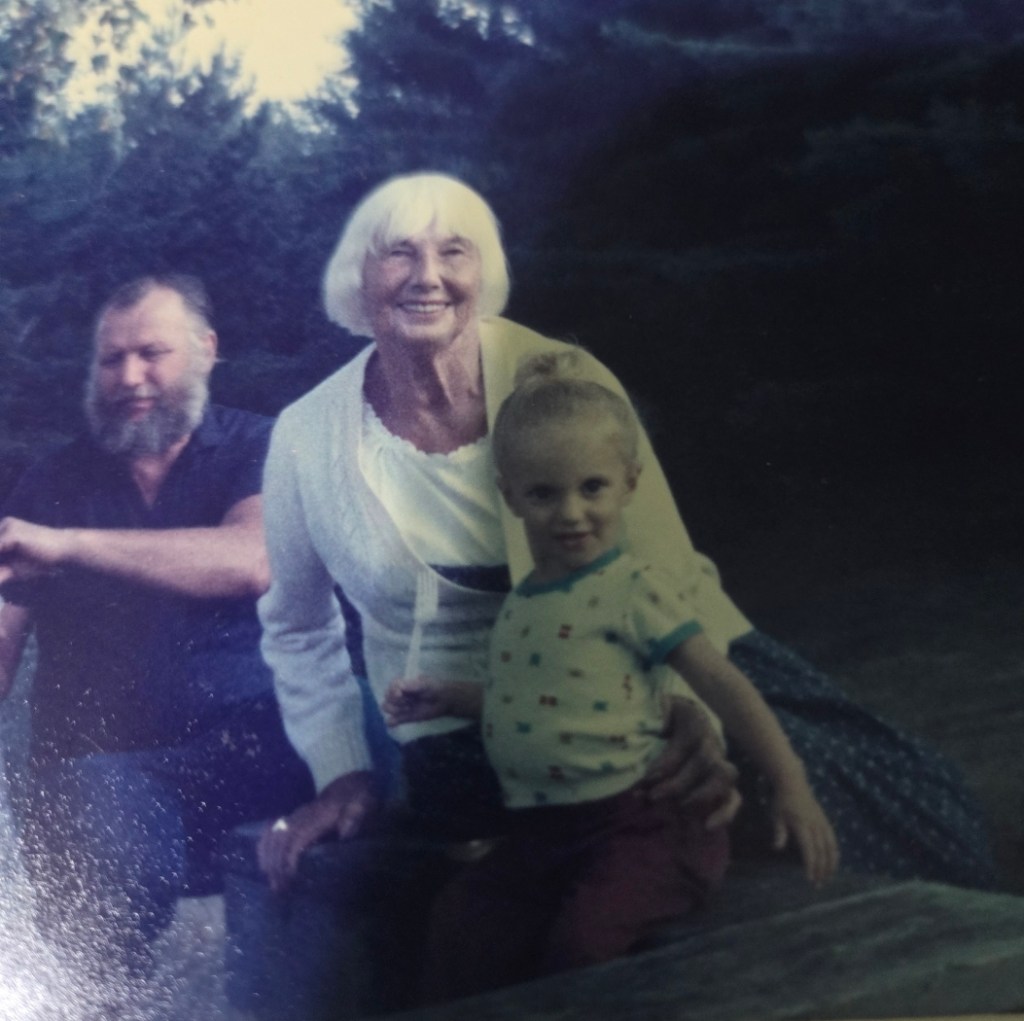
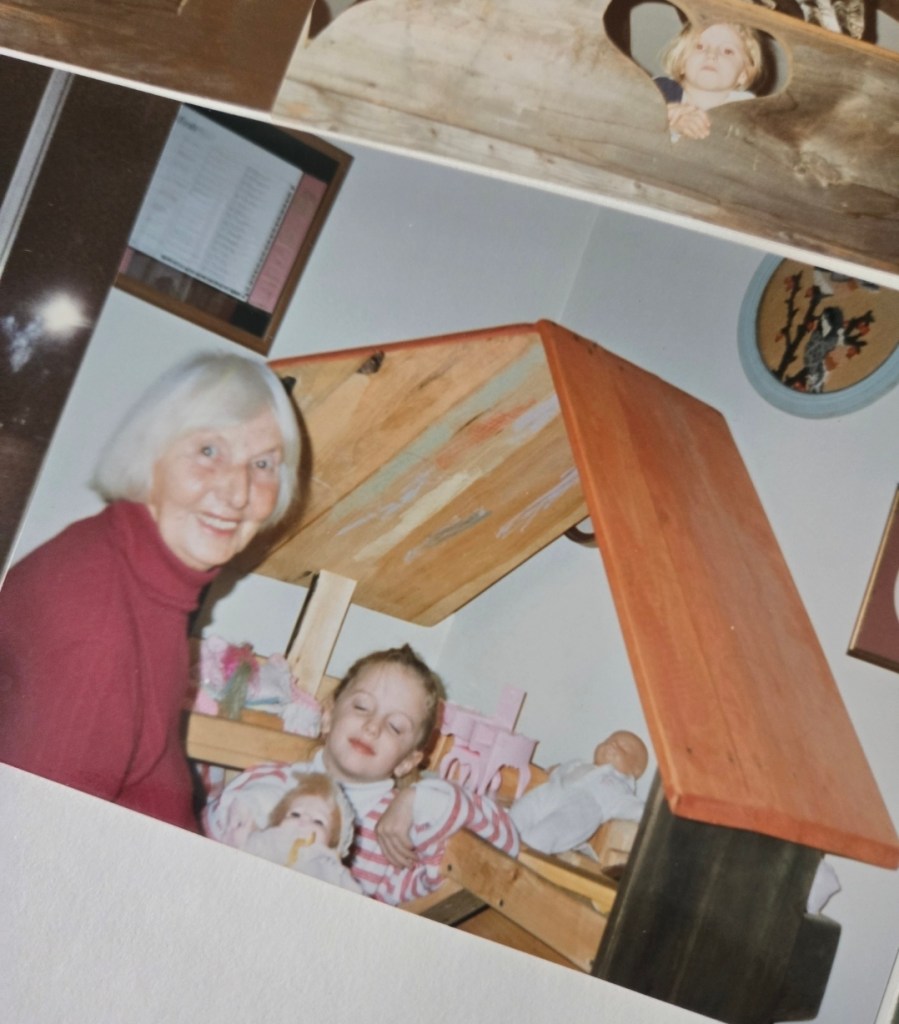
    I was so blessed that my Omi (German for Grandmother) lived until her 90s and she came to visit us in America many times throughout my life. When I close my eyes I can still picture her larger than life stature and her big strong German hands. Had she not found the strength to hold on that day, who knows what would have happened to my father and Uncle. Would they have been orphaned?

    Her strength was a guiding force that protected her family time and again while the war raged. When they reached Berlin, she made the tough decision to keep them moving instead of staying there with my Great Grandmother. Food had become scarce, so she decided to continue on to Austria, so that they would not be a burden on family in Berlin and would be farther away from the fighting. It once again saved their lives, as later they would learn that my Great Grandmother eventually starved to death in Berlin.

    My Omi was the definition of strength and she did whatever was necessary to take care of her children and keep them safe. But she’s not the only strong woman in this World. Throughout history and currently, so many women from places all over the world show the same drive to do just about anything if it means that their children will live and be safe.

    My father, uncle, and grandmother narrowly escaped with their lives that day, and then lived as refugees for a long time in Austria. They survived by eating potato peels and kitchen scraps from the inn my Omi worked at until it was safe enough to return to Germany. They were the lucky ones. People often talk about how many die during combat, but rarely mention those who starve to death after war, when their cities lie in ruins and there is no way to find food. It is estimated that 25 million people died after World War 2 due to famine and starvation. Somehow, a fact I rarely hear mentioned.

    Every time I hear people talking about refugees as some terrible drain on society, my heart breaks for them. The truth is, no matter what war or country they flee, they are just trying to survive and rebuild. They have most likely seen and experienced things that you could never imagine. Most have lost everything and are desperate to get a second chance to know peace and stability after war.

    If you ever meet a refugee, please show them kindness. Please show them compassion. Please show them love. They have already suffered so much. Please don’t make their suffering worse by making them feel unwanted when they already have nothing left to go home to. They just want to know peace once again after suffering of war.

    Be their peace.

    Love, Verina